Back to event

Event session · Dallas Business Accelerator

The Future of Smart Cities: Technology, Innovation & Economic Growth

The Future of Smart Cities: Technology, Innovation & Economic Growth

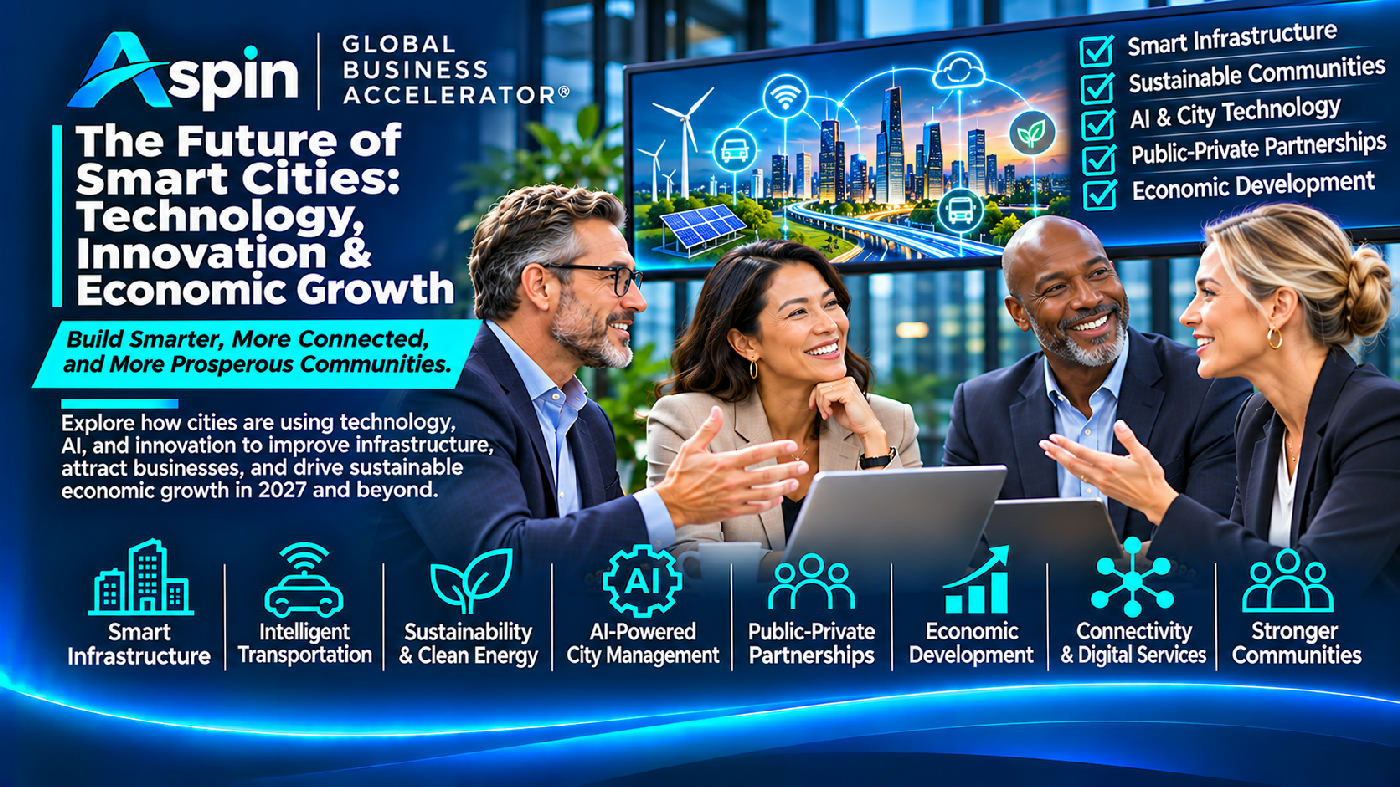
How are cities using technology, AI, and innovation to improve infrastructure, attract businesses, and create stronger communities? Join city leaders, technology executives, urban development experts, and economic development professionals to explore how smart cities are transforming transportation, energy, public services, connectivity, and economic growth. Discover opportunities in intelligent infrastructure, AI-powered city management, public-private partnerships, sustainability, and emerging technologies shaping the cities of 2027 and beyond.

Tue, Nov 17
12:30 PM – 1:00 PM MST
Live online

About this session

Cities around the world are experiencing a major transformation as artificial intelligence, connected infrastructure, automation, and digital technologies change how communities operate, deliver services, and support economic growth.

From intelligent transportation systems and energy-efficient buildings to connected utilities, digital public services, and advanced telecommunications, smart city technologies are creating opportunities to improve quality of life while reducing costs and increasing operational efficiency.

But what truly makes a city smart, and how can government leaders, technology companies, investors, and businesses work together to create more connected, efficient, and economically vibrant communities?

Join experienced city executives, technology innovators, infrastructure leaders, and economic development professionals for a forward-looking discussion on the future of smart cities and urban innovation.

Our panelists will share real-world examples of how cities are adopting new technologies to modernize infrastructure, improve public services, manage resources, and create environments where businesses can thrive.

Discover how artificial intelligence, Internet of Things (IoT) technology, connected sensors, advanced analytics, and automation are helping cities make better decisions about transportation, utilities, energy, public safety, and infrastructure investments.

We'll explore how smart city initiatives can support business development by attracting investment, encouraging entrepreneurship, expanding digital connectivity, and creating new opportunities for technology companies and service providers.

Learn how public-private partnerships bring together governments, businesses, universities, investors, and technology innovators to fund and implement infrastructure improvements.

The discussion will also examine smart buildings, clean energy, intelligent transportation, digital government services, cybersecurity, and the role of data in improving city operations.

Beyond technology, our panelists will address the practical challenges of developing smart cities, including funding, regulatory requirements, public trust, data privacy, cybersecurity, interoperability, and measuring return on investment.

Whether you're a business executive exploring smart city opportunities, a technology company developing urban solutions, a city leader planning infrastructure improvements, or an investor interested in emerging markets, this session will provide valuable insights into how cities and businesses can collaborate to build smarter, more connected communities in 2027.

Following the panel, participate in a 10-minute networking session to connect with city executives, economic development leaders, technology companies, infrastructure providers, and potential strategic partners.

What you'll take away

  • Understand the Future of Smart Cities: Discover how AI, connected infrastructure, automation, and digital technologies are changing urban development and city operations.
  • Explore Smart City Business Opportunities: Learn how technology companies, service providers, investors, and entrepreneurs can participate in smart city initiatives.
  • Modernize Urban Infrastructure: Explore intelligent transportation, connected utilities, infrastructure monitoring, and digital infrastructure management.
  • Leverage AI & Data Analytics: Discover how cities use data to support planning, improve services, forecast demand, and allocate resources more effectively.
  • Improve Transportation & Mobility: Learn about smart traffic management, intelligent transportation systems, connected mobility, and emerging urban transportation solutions.
  • Develop Smarter Energy Systems: Explore smart grids, energy management, efficient buildings, and strategies for reducing energy consumption.
  • Improve Public Services: Understand how digital government platforms, automation, and connected technologies can make public services more accessible and efficient.
  • Support Economic Development: Discover how smart city investment can attract businesses, create jobs, encourage innovation, and strengthen local economies.
  • Build Public-Private Partnerships: Learn how cities collaborate with technology companies, investors, universities, and infrastructure providers.
  • Explore Smart Buildings & Connected Communities: Understand how connected systems can improve building performance, safety, resource management, and tenant experiences.
  • Strengthen Digital Connectivity: Explore how fiber networks, broadband, wireless technologies, and connected infrastructure support economic development.
  • Address Cybersecurity & Data Privacy: Learn why securing connected systems and protecting residents' information are essential to smart city development.
  • Evaluate Smart City Investments: Understand how governments and business partners assess feasibility, implementation costs, operational savings, and community benefits.
  • Create Scalable Urban Innovation: Discover how pilot projects can be evaluated and expanded into successful citywide programs.
  • Build Strategic Relationships: Connect with government leaders, infrastructure companies, technology providers, and investors interested in urban innovation.

Who should attend

  • Mayors, city managers, and municipal executives
  • Smart city program directors
  • Economic development executives
  • City planning and urban development leaders
  • Technology company CEOs and founders
  • AI, IoT, and automation executives
  • Infrastructure and engineering company leaders
  • Transportation and mobility technology executives
  • Energy and utility company executives
  • Telecommunications and broadband providers
  • Real estate developers and smart building executives
  • Construction and infrastructure company owners
  • Public-private partnership and government relations executives
  • Corporate innovation and technology leaders
  • Cybersecurity and data privacy professionals
  • University research and innovation leaders
  • Investors focused on infrastructure and technology
  • Business owners exploring government and municipal contracts
  • Entrepreneurs developing urban technology solutions

Questions

  • What makes a city truly smart, and how is smart city technology transforming urban communities?
  • What are the most important smart city technologies and innovations emerging in 2027?
  • How can artificial intelligence help cities improve infrastructure, services, and decision-making?
  • What business opportunities do smart city initiatives create for technology companies and entrepreneurs?
  • How can cities use connected sensors and IoT technology to monitor and manage infrastructure?
  • What are the most effective ways to improve transportation, mobility, and traffic management through technology?
  • How can smart grids and energy management systems reduce costs and improve sustainability?
  • What role do smart buildings and connected infrastructure play in future urban development?
  • How can cities improve public services through digital platforms and automation?
  • How can smart city investments attract businesses, create jobs, and support economic development?
  • What types of public-private partnerships are most effective for implementing smart city projects?
  • How can smaller cities and municipalities adopt smart technologies with limited budgets?
  • What financing models can governments use to support smart city infrastructure?
  • How do cities evaluate vendors and technology providers for smart infrastructure projects?
  • What opportunities exist for startups and small businesses to participate in smart city development?
  • How can cities manage cybersecurity, data privacy, and public trust when deploying connected technologies?
  • What challenges arise when integrating new technologies with existing city infrastructure?
  • How can governments measure the financial and community impact of smart city projects?
  • What lessons can cities learn from successful smart city initiatives around the world?
  • How can economic development organizations and private companies work together to create stronger innovation ecosystems?
  • What role will AI, automation, advanced connectivity, and intelligent infrastructure play in the next generation of cities?
  • What should city leaders and technology executives prioritize in 2027 to build smarter, more efficient, and economically competitive communities?

Meet your speakers

Chris Nunez

Chris Nunez

Founder · Map4 Software

Founder of Map4 Software | Director of Business Development at Tahoe Network Infrastructure | Telecom Technology Entrepreneur | Geospatial Intelligence & GIS Strategist | Enterprise Software Developer | Strategic Partnerships & Business Development Executive

View speaker profile
Pedro José Rivera

Pedro José Rivera

CEO · Chief Executive Officer

Pedro J. Rivera is an attorney and CEO of PJR Consulting LLC. He is an expert nonprofit fundraising strategist specializing in philanthropy, major gifts, and advising Latino nonprofit leadership on sustainable revenue generation.

View speaker profile
Steven Tedjamulia

Steven Tedjamulia

Founder and Executive Director · Aspin Business Accelerator

Moderator

Steven Tedjamulia is an entrepreneur, product leader, and applied AI innovator with more than 25 years of experience helping organizations turn emerging technologies into measurable business results.

View speaker profile
Eric Lopkin

Eric Lopkin

President/Chief Executive Officer/Founder · The Modern Observer Group

Founder of The Modern Observer Group | Creator of Human Centered Achievement | Business & Performance Coach | Workforce Development Strategist | International Best-Selling Author | Speaker, Podcast Host & Producer

View speaker profile
Parker Walden

Parker Walden

Chief Information Security Officer (CISO) & Chief Technology Officer (CTO) · Data Samurai

CISO & CTO at Data Samurai | Director of Operations at Crosswind | Digital Transformation Strategist | Cybersecurity & Cloud Architecture Leader | AI Automation & Data Analytics Expert | Business Operations Executive

View speaker profile
Rachel Liste

Rachel Liste

Regional Account Manager · Alliance Corporation

Regional Account Manager at Alliance Corporation | Channel Sales & Strategic Partnerships Leader | Technology Distribution Specialist | Business Development & Customer Experience Expert

View speaker profile